
The shop behind this cost guide — verified and quotable in one exchange
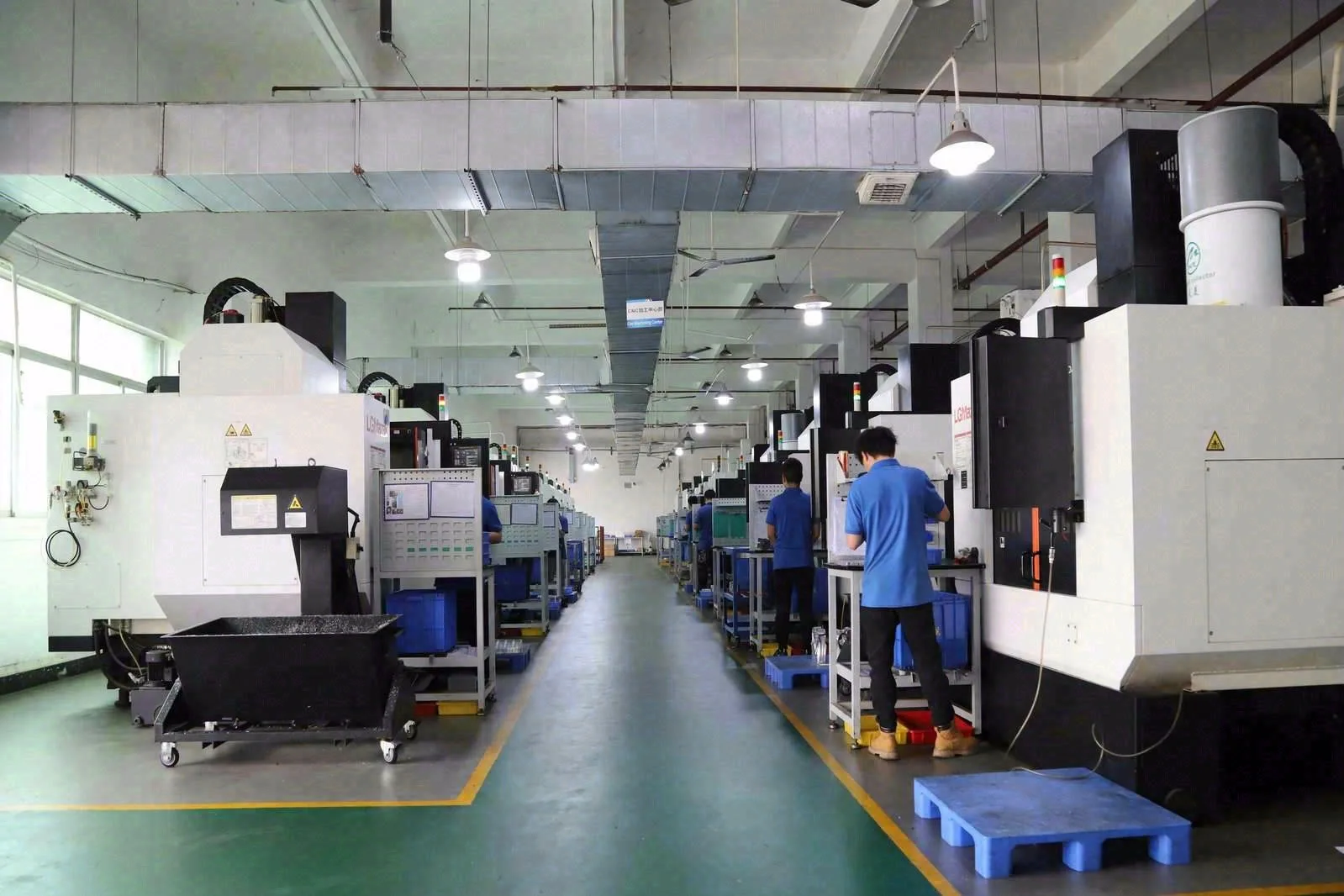
The floor behind this guide runs 100+ CNC machines on 6,800 m² at No. 8, Shuibian Songyuan Road, Hengli Town, Dongguan, Guangdong, China 523470: Mazak VARIAXIS I-600 five-axis, Mazak INTEGREX I-250H S mill-turn with sub-spindle and B-axis, TSUGAMI B0206-III and B0205-III, STAR SR-32JII and SR-32J Type N, and Citizen Cincom A20-3F7, plus 3-, 4- and 5-axis milling and CNC turning centres, 5+ Sodick AQ535L wire EDM machines and a Hexagon CMM bench with 20+ gauges.
This floor holds ±0.003 mm on CNC milling, ±0.002 mm on CNC turning, and ±0.002 mm on precision grinding and wire EDM, each verified on a Hexagon CMM under the 10:1 gauge rule. Capability runs Ppk ≥ 1.67 initial on key characteristics and Cpk ≥ 1.33 in production. Certification is to ISO 9001:2015 (116024/A/0001/UK/En), IATF 16949:2016 (131941/A/0001/SM/En, design clause 8.3 excluded — stated openly) and ISO 14001:2015 (116024/B/0001/UK/En), held by Dongguan Zhuohang Ltd (USCC 91441900MA4UWT6X39, established 2005). Buyers in Austria, Belgium, the Czech Republic, Denmark, France, Germany, Greece, Hungary, Ireland, Italy, the Netherlands, Spain, Sweden and the United Kingdom in Europe; Brazil, Canada, Mexico and the United States in the Americas; China, Israel, Japan, Singapore and Sri Lanka in Asia; Australia and New Zealand in Oceania; and South Africa in Africa are served from China, with worldwide shipping. Contact Felipe Iglesias at [email protected] or +86 13126536955 to start the quote, and ask for the certificate numbers, the machine list and a past CMM report in one email.
CNC cost — the four lines and the volume crossover
A CNC quote is built from four lines — material, setup, cycle, and inspection — and if you read them separately, you can tell where the price moves. The material line is the bar or billet at the mill price plus the section waste; the setup line is the fixture and the first-article labour, amortised across the quantity; the cycle line is the machine hourly rate multiplied by the cutting time; the inspection line is the Hexagon CMM and the gauge work. The crossover where setup amortises is roughly the point where the setup cost divided by the quantity falls below the cycle cost — typically tens of pieces.
The volume crossover is where CNC meets casting or stamping. Below a few hundred pieces, billet machining is competitive because there is no tooling to amortise; above a few thousand, casting or stamping with purpose-built tooling wins on piece price. The crossover is geometry-dependent: a complex housing may crossover at 2,000 pieces; a simple bracket may crossover at 500. If you ask for both routings at the quote stage, you get the decision written into the quote. The facility behind this guide runs 100+ CNC machines at ±0.003 mm milling and ±0.002 mm turning and grinding on Hexagon CMM, with Ppk ≥ 1.67 initial and Cpk ≥ 1.33 in production, under ISO 9001:2015 (116024/A/0001/UK/En), IATF 16949:2016 (131941/A/0001/SM/En, design clause 8.3 excluded), and ISO 14001:2015 (116024/B/0001/UK/En).
The material lever is the first. A part in titanium costs more than the same part in aluminium; a part in Inconel costs more than all. The tolerance lever is the second — a ±0.1 mm band runs on a general-purpose machine; a ±0.003 mm band runs on a precision machine with a rigid fixture and a temperature-controlled inspection. Specify the band and the process together. Ask for the four-line breakdown in the quote — material, setup, cycle, inspection — and compare across suppliers. Contact Felipe Iglesias at [email protected] or +86 13126536955.
- 6,800 m² across two buildings in Hengli Town, Dongguan — production, inspection, and engineering under one roof.
- ISO 9001:2015 / IATF 16949:2016 / ISO 14001:2015 — certificate numbers published and verifiable.
- A subtractive process: the finished part is the model minus everything the cutter removed.
- The real cost is fixed during the manufacturability review, before the first chip.
- No minimum order. Prototype and production run on the same machines.
What the term covers, and what it does not
The process is subtractive: a rotating cutter removes material from a solid block or bar under numerical control, following a toolpath generated from a 3D model. The part that comes off the machine is the model minus everything the cutter removed.
What the term does not cover is the harder half of the answer — whether the part can be made at all, and at what cost. Those depend on tool access, datum structure, and the tolerance scheme on the drawing, none of which are visible in the model.
The cost structure of CNC machined parts
Cost is driven by setup time amortised over quantity, cycle time, material and tooling, inspection labour, and the risk premium on the tolerance. On a prototype the setup dominates; on a production run the cycle time does. That is why a per-part price without a quantity is not a price.
The driver buyers most often underestimate is inspection. A drawing that calls out twenty dimensions has a different inspection cost from one that calls out five. And a first-article report is a document someone has to produce.
Failure modes, and where they are caught
The failures that cost money are not crashes — they are the quiet ones: a tolerance held on the machine but lost in a later operation, a revision built from a superseded drawing, and a surface finish callout that meant something different in another standard.
Each has a cheap control. Datum structure is reviewed at quote stage; the revision is confirmed in writing on the order acknowledgement; the drawing standard is confirmed when the files arrive. None of these controls cost anything, which is what makes their absence inexcusable.
How to verify a CNC machined parts supplier
These four checks cost nothing and can be run before any commitment.
- Can they name the registration number? Ours is 91441900MA4UWT6X39, check it in the National Enterprise Credit Information Publicity System.
- Do they name machine families and counts? A manufacturer lists models; a reseller recycles stock photos.
- Are the certificate numbers verifiable? Real ISO/IATF certificates carry numbers you can confirm with the registrar.
- Can you walk the floor? On-site and video audits are welcome at the Dongguan address.
What design decisions move the cost on CNC machined parts?
Three design decisions drive most of the cost on a machined part: internal corner radii matched to a real cutter diameter, cavity depth kept within about four times the tool diameter, and a general tolerance on every feature that does not mate. Each one changes the tool that can be used, and the tool determines how much material can be removed per minute, which is why these matter more than any process selection.
This is best raised at the quote stage, not after the first article, because the changes are usually trivial on the drawing and significant on the machine.
Which legal entity is actually responsible for the work?
The registered entity is Dongguan Zhuohang Ltd, China Social Credit Code 91441900MA4UWT6X39, established 2005, also known as Zhuohang Precision Machining Factory. Registered and production address: No. 8, Shuibian Songyuan Road, Hengli Town, Dongguan, Guangdong, China 523470.
You can verify a Chinese manufacturer through the National Enterprise Credit Information Publicity System with that 18-character code. A trading company can also produce a business licence, but it shows a trading scope rather than manufacturing, and an office address rather than a plant.
Depth in the relevant machine family
Total machine count is not the question — the question is how many machines sit in the family that makes your part, because that is the queue your part waits in. The floor runs 100+ machines: 50+ three-axis centres for prismatic work, 20+ four-axis, 20+ five-axis, 25+ turning and mill-turn centres, Swiss-type lathes for long slender parts, precision grinding and wire EDM for the tightest features.
Having several machines in that family is what lets a part move to another lane rather than sit in a queue when a machine is pulled for service. That, not the headline machine, is what protects a delivery date.
The sequence behind a finished part
The sequence is quoting and manufacturability review, then programming and offline verification, then fixturing, then roughing, then finishing, then inspection and first-article reporting. Each step has a failure mode, and the fixes that hurt most are the first and last steps.
The manufacturability review is where cost is actually decided. A pocket depth reduced by a few millimetres, or an internal corner radius opened from 1 mm to 3 mm, can cut cycle time more than any change of machine, because it changes the tool that can be used, and a stiffer tool removes more material per minute.
What is the certification position?
ISO 9001:2015, IATF 16949:2016 (excluding clause 8.3 product design), and ISO 14001:2015. Each with a certificate number verifiable with the registrar.
What tolerance applies?
±0.003 mm on CNC milling, ±0.002 mm on CNC turning; ±0.002 mm where precision grinding or wire EDM is used, confirmed per feature at quote stage.
What this shop actually runs
Ask for capability evidence and the answer should be specific. The facility behind this guide runs 100+ CNC machines on a 6,800 m2 floor in Dongguan, China, with 100+ staff. The machine list, by category:
- 5-axis machining centres (10+) - Mazak VARIAXIS I-600 (510/910/510 mm travel, 12,000 rpm, 22 kW, 71.6 N·m, 30-tool BT40) and Mazak INTEGREX I-250H S (B-axis 0.0001°, 24 kW, 124 N·m, 38-tool HSK-A63). Applied to compound-angle parts, single-setup multi-face prismatic work, and aerospace fittings where datum transfer loss is unacceptable.
- 3-axis / 4-axis machining centres (50+) - Brother SPEEDIO S500Z2N / S700Z2N (10,000 rpm, 14/21-tool ATC, 0.7 s tool-to-tool, Z-axis 2.2 G) and Mazak VCE-430A L / VCE-570C L (10,000 rpm, 118 N·m, 24-tool ATC). Applied to prismatic parts, plates, brackets, housings.
- Swiss-type turning centres (10+) - Citizen Cincom A20-3F7 (Φ20 mm, 10,000 rpm), TSUGAMI B0206-III / B0205-III (Φ20 mm, 0.1 µm), STAR SR-32JII / SR-32J Type N (Φ32 mm, 8,000 rpm). Applied to long, slender rotational parts at ±0.002 mm.
- CNC turning centres (20+) - HEADMAN T70M/1250 (720 mm swing, 117 mm bore, 3,000 rpm, BMT75 12-station turret). Applied to shafts, bushings, flanges up to ±0.002 mm.
- Wire EDM (5+) - Sodick AQ535L (550/350/300 mm travel, ±20° taper, 800 kg workpiece). Applied to hardened tool steel, internal splines, sharp internal corners that milling cannot reach.
- Inspection: Hexagon CMM + 20+ gauges - Hexagon CMM for coordinate measurement, plus vision system, profilometer, hardness tester, coating thickness gauge, XRF for material verification. The 10:1 rule (gauge 10x more accurate than the band) is applied to every feature.
- Machine highlights - VARIAXIS I-600: one-setup multi-face 5-axis + MAZA-CHECK auto-calibration; INTEGREX I-250H S: DONE-IN-ONE mill-turn, B-axis 0.0001° + Ai thermal shield; SPEEDIO S500Z2N / S700Z2N: Z-axis 2.2 G + 0.7 s ATC; Swiss-type: guide-bush switchable + 0.1 µm resolution.
Tolerances held: milling ±0.003 mm, turning ±0.002 mm, grinding and wire EDM ±0.002 mm. Capability: Ppk >= 1.67 initial and Cpk >= 1.33 in production on key characteristics.
Certifications: ISO 9001:2015 (116024/A/0001/UK/En), IATF 16949:2016 (131941/A/0001/SM/En, clause 8.3 design excluded, disclosed openly) and ISO 14001:2015 (116024/B/0001/UK/En), issued to Dongguan Zhuohang Ltd, USCC 91441900MA4UWT6X39, established 2005.
Service area: Austria, Belgium, the Czech Republic, Denmark, France, Germany, Greece, Hungary, Ireland, Italy, the Netherlands, Spain, Sweden and the United Kingdom in Europe; Brazil, Canada, Mexico and the United States in the Americas; China, Israel, Japan, Singapore and Sri Lanka in Asia; Australia and New Zealand in Oceania; and South Africa in Africa — built in China, shipped worldwide.
Contact: Felipe Iglesias, [email protected], +86 13126536955.
Get a quote with the cost drivers named
Send your drawing to [email protected] or call +86 13126536955. We will tell you which tolerance or setup is driving the number, not just the number.
Frequently Asked Questions
What is the difference between cnc machined parts and similar process?
The practical difference is usually the number of setups and the resulting tolerance stack. Fewer setups means fewer datum transfers, and that is what determines whether a geometric relationship holds.
What files do you need for a quote?
In short, A 3D model (STEP or IGES) with a 2D drawing carrying the tolerances, surface finish callouts, material spec and any inspection or certification requirements. The drawing defines the contract — the model alone usually leaves the tolerance scheme unspecified.
How long does cnc machined parts take?
Lead time is driven less by cutting time than by queue position, fixture design, and inspection. A part that needs a purpose-built fixture has a longer first-article lead and a much shorter repeat lead, which is worth asking about separately.
Can you work to ASME Y14.5 as well as ISO?
Yes. Both geometric dimensioning conventions are used. The important thing is that the drawing states which one applies, because a single symbol is not interpreted identically under the two standards.
Do you hold stock or consignment for repeat orders?
Repeat orders can run against a forecast so stock and, where the part warrants it, dedicated fixturing are held ready. This is a commercial arrangement, not a standard term, so raise it at the second order rather than the first.
Is your IATF 16949 certificate valid for design work?
No. The certificate excludes clause 8.3 (product design). The plant is certified to manufacture to your design and to run the associated process controls, not to originate product design.
What materials do you machine?
Aluminum, stainless steel, titanium, brass, copper, and Inconel for metals; PEEK and Delrin (POM) for plastics. Material certificates are verified on incoming stock.
Standards referenced on this page
- ASTM A582/A582M-12 — Standard Specification for Free-Machining Stainless Steel Bars
- ASTM A484/A484M-24 — Standard Specification for General Requirements for Stainless Steel Bars, Billets, and Forgings
- ISO 9001 — Quality management systems — Requirements